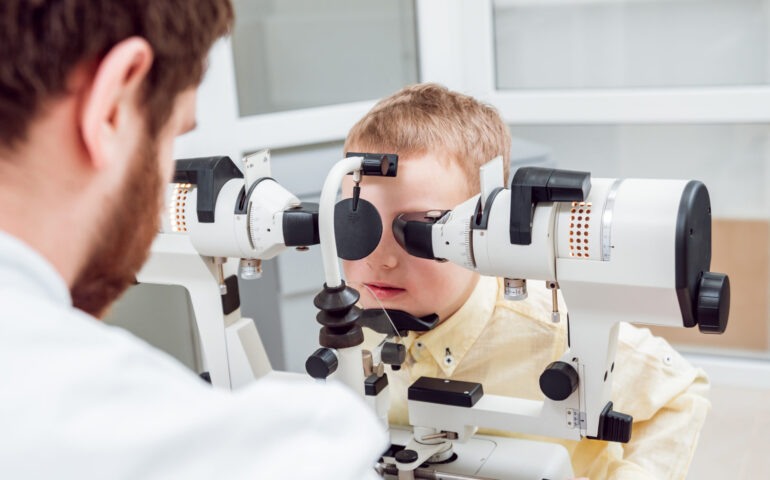

Improving sight does not always mean glasses or contact lenses. Sometimes, it can be corrected with visual therapy. This type of personalised therapy merges optometry with behavioural psychology or neuroscience and has nothing to do with improving visual acuity.
The role of the brain in sight, key to visual therapy.
Processing the visual information is not done by the eye but the brain. The latter has final responsibility for processing the information from our surroundings and for sharing this information with areas that control hearing, muscles, language or balance, among many others.
Who is visual therapy aimed at?
This is indicated for all kinds of patients with specific symptoms, particularly relevant for the school, sports or work environment.
Amblyopia or lazy eye
Strabismus
Focussing problems
Blurry vision
Double vision
Presbyopia
Binocularity problems
Oculomotor coordination problems
Learning, language or school failure problems
Visual problems in dyslexia
Attention difficulties
Reduced visual memory
Difficulty in mathematical thinking
Difficulty in visual skills
Visual perception problems
Development and laterality problems
Directionality problems
Ergonomics and visual hygiene