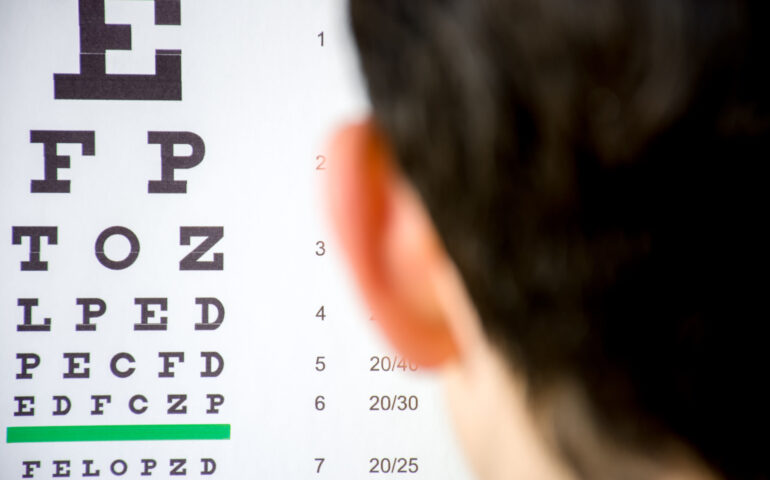

Short-sightedness is a refractive defect that shows as blurry vision of far objects. It normally appears because the eye is longer than normal or due to excessive power of refraction of the cornea or lens.
Short-sightedness can cause serious ocular pathologies. Short-sighted patients suffer more often from open-angle glaucoma, retinal detachment, macular problems, cataracts and irreversible visual losses. The likelihood of having these pathologies is greater as the dioptres increase, particularly in patients with more than 5.
The best way to control short-sightedness is detection in childhood. Our aim with short-sighted patients is not just to improve their sight, but to carry out check-ups to try to reduce the possibility of developing future pathologies.
Non-pharmacological techniques for controlling short-sightedness:
Currently there are techniques that have scientifically proven that it is possible to reduce the progression of short-sightedness.
ORTHO K ORTHOKERATOLOGY
These are rigid contact lenses with a special design that are worn whilst sleeping and that correct sight during the day, without the need for glasses or contact lenses.
SOFT CONTACT LENSES
Contact lenses with a multi-focal design specially designed for controlling short-sightedness.
NEW GLASSES TO CONTROL SHORT-SIGHTEDNESS
This uses a type of lens with peripheral blur (Defocus Incorporated Multiple Segments DIMS) providing an unfocussed image to specific areas of the retina with the aim of controlling the progression of the short-sightedness.
Pharmacological techniques for controlling short-sightedness:
Topical atropine drops are frequently used to dilate the pupil, often as part of eye exams or before or after eye surgery. Atropine drops in various doses can also help delay the progression of short-sightedness.