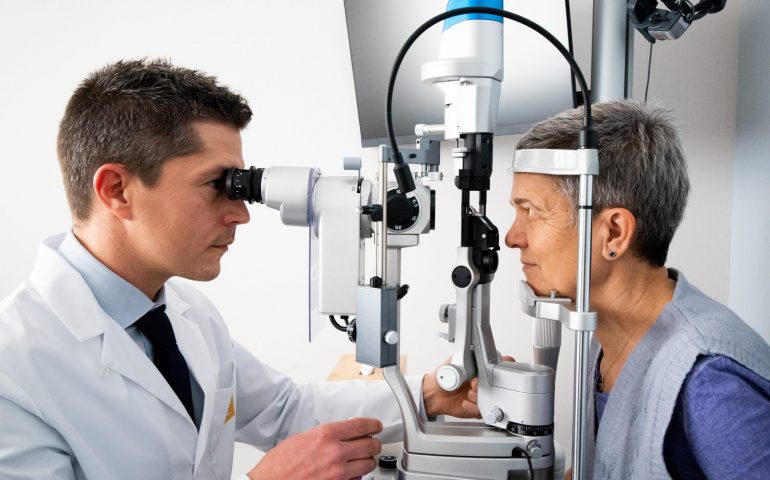

Refractive surgery is the series of surgical techniques aimed at correcting refractive defects, in other words, short-sightedness, long-sightedness and astigmatism. Its purpose is to reduce or eliminate the need to use glasses or contact lenses. These techniques include procedures done on the cornea (laser surgery) and procedures to implant intraocular lenses (intraocular surgery), and are indicated depending on the type of refractive defect and the anatomic characteristics of each eye.
Techniques based on EXCIMER LASER
LASIK or FemtoLASIK
LASIK (Laser assisted in situ Keratomileusis) is one of the most used techniques in the world for the correction of refractive defects, and has more than 30 years of experience. It consists of lifting a thin layer of corneal tissue at around 100 microns deep (which we call a flap) to then apply the excimer laser to reshape the corneal curvature and remove the refraction defect. Finally, the corneal flap is repositioned, which adheres without the need for stitches.
It is a quick, safe technique (lasting about 5 minutes per eye) that is simple and effective, and allows the patient to quickly return to their activities.
PRK or Advanced Surface Ablation
Photorefractive Keratectomy (PRK) consists of removing the corneal epithelial (which is like the skin of the cornea) to then apply the excimer laser to reshape the corneal curvature. Afterwards, a therapeutic contact lens is put in place until the corneal surface heals (2-3 days).
This is the technique of choice for patients with low graduations, thin corneas or biomechanical alterations (including cases in which LASIK would be contraindicated) and also in patients that play contact sports. In this kind of surgery, visual recovery is more progressive and the patient may notice some discomfort during the first 2 or 3 days.
Technique based on the implantation of a PHAKIC INTRAOCULAR LENS (ICL, EYECRYL, IPCL)
In consists of putting a flexible intraocular lens made from biocompatible material through a small incision and putting it behind the iris and in front of the lens, with no need to modify any ocular structure.
This surgery is indicated in patients that have high graduation defects or who are not suited to laser surgery for some reason.